


 Back
Back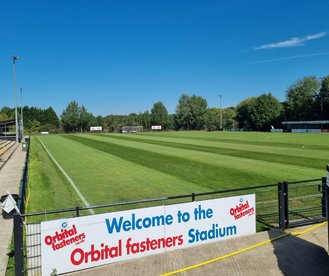
Girls football thriving at Kings Langley
Callum Humphrey, as part of his journalism coursework, took a close look at our Girls Football offer. Read it here.
Football has not always been the most inclusive of sports. The FA banned women from participating on their pitches in 1921, and the game has been largely male-dominated ever since.
But times are changing. England’s Lionesses inspired a nation by winning the European Championships in 2022, and then again in 2025. Interest in the girls’ game has boomed since, and participation has increased with it.
The FA reported a 56% rise in the number of girls playing between 2020 and 2024, and the BBC experienced a record number of female viewers for live sport in the summer of 2025, which included a Women’s Euros and Rugby World Cup.
Football clubs like Kings Langley, though, are doing their best to ensure the progress does not stop there.
They held their third Her Game Too matchday earlier this season, continuing a partnership aiming to promote inclusivity and gender equality in sport.
“It seemed like the perfect time to show the club wanted to be more inclusive and more of a welcoming environment for female supporters,” said Dean Wigzell, Kings Langley’s community officer and under-13 girls’ team coach.
“I think that’s the beauty of Her Game Too - it shows the girls that we’re embracing not just girls football, but that we’re embracing them into the world of football generally.
“For the girls to feel like they belong in the first-team environment as much as the blokes in the bar now having a pint now do, it’s really, really important.
“Hopefully that will continue for a long, long time.”
Members of the club’s various girls’ sides were involved in the men’s first-team’s match against Potton United, acting as mascots, leading the teams out and taking part in a half-time penalty shootout.
The girls, whose ages ranged from eight to 15, chatted to injured first-team striker Matt Bateman, quizzing him on his goalscoring knack and recovery, and could be found kicking a ball on the back pitch during the men’s game as well.
Some even had to be stopped from setting up their own game in the middle of the teams’ warm-ups, using stray poles found on the side of the pitch as goalposts.
Growing the girls’ offering has been a big focus at the club in the last few years.
Chairman Darren Elliot offered free girls football for the 2022/23 season, and takeup since has been huge, attributed to a combination of national factors and the club’s own work.
Kings Langley now have eight teams playing in the Hertfordshire Girls Football Partnership League, and entered a girls' team into the traditionally male-dominated West Herts Youth League last season, with many girls competing in mixed teams alongside boys.
Yet there is a desire to push on further still, with some girls already going on to join the likes of Arsenal and Chelsea.
“Increasing girls football has been one of our primary objectives pretty much the whole time that I’ve been involved in the committee,” said Kings Langley head of youth football Ashley Lawrence.
“We’ve been really fortunate that over the last two or three years, we’ve really seen that increase exponentially.
“We’re night and day from where we were three or four years ago. I think we only had two or three teams, so over double where we were.
“The one thing we want as a youth committee is to ensure that the football club represents the village, and five or six years ago that simply wasn’t the case when it came to girls football - there weren’t enough girls’ teams.
“It’s completely transformed what the club feels like on a Saturday, because from 10am, when the first game kicks off, through to when the first team’s game finishes around 5pm, there’s a constant stream of people wearing that Kings Langley badge, representing the club.
“On a Saturday that’s exclusively girls, through until the first team starts.”
There’s now a pathway for girls at Kings Langley, starting with the Soccer School for players aged six to nine - named after club mascot Ned the Lion - through to the under-15s team.
And there is an ambition within the club to one day reach complete equality.
“I think we have to be realistic, in that we’re coming from a place where we were almost exclusively boys’ football, so it will be a gradual process,” Lawrence says.
“But, ultimately, we all know that football should be equally representative of boys and girls.
“We’re a long way from that still, but we’re so far ahead of where we were a few years ago.
“We would love to see as many girls playing for Kings Langley as there are boys, and we would love to have as many girls’ teams as we do boys’ teams.”
The Orbital Fasteners Stadium has previously hosted the likes of Watford FC Women, who play two levels below the Women’s Super League in Women’s National League South, and the aim for Kings Langley is to one day have its own senior team on the back of growth at youth level.
“It’s definitely something we’ve discussed, something we’d like to achieve in the long term,” said Wigzell.
“We’re fortunate that we’ve had other women’s teams play here, of a higher level. It’s aspirational for us as a club to see how they operate when they’re here, and it’s a good opportunity for our girls when they come down and watch those games.
“It’s a long-term objective, and it probably is a little way down the road, but there’s no reason why it shouldn’t be.”